Breed Page

Alaskan Klee Kai — BetterBred Breed Page – BetterBred.com
BetterBred Breed Profile

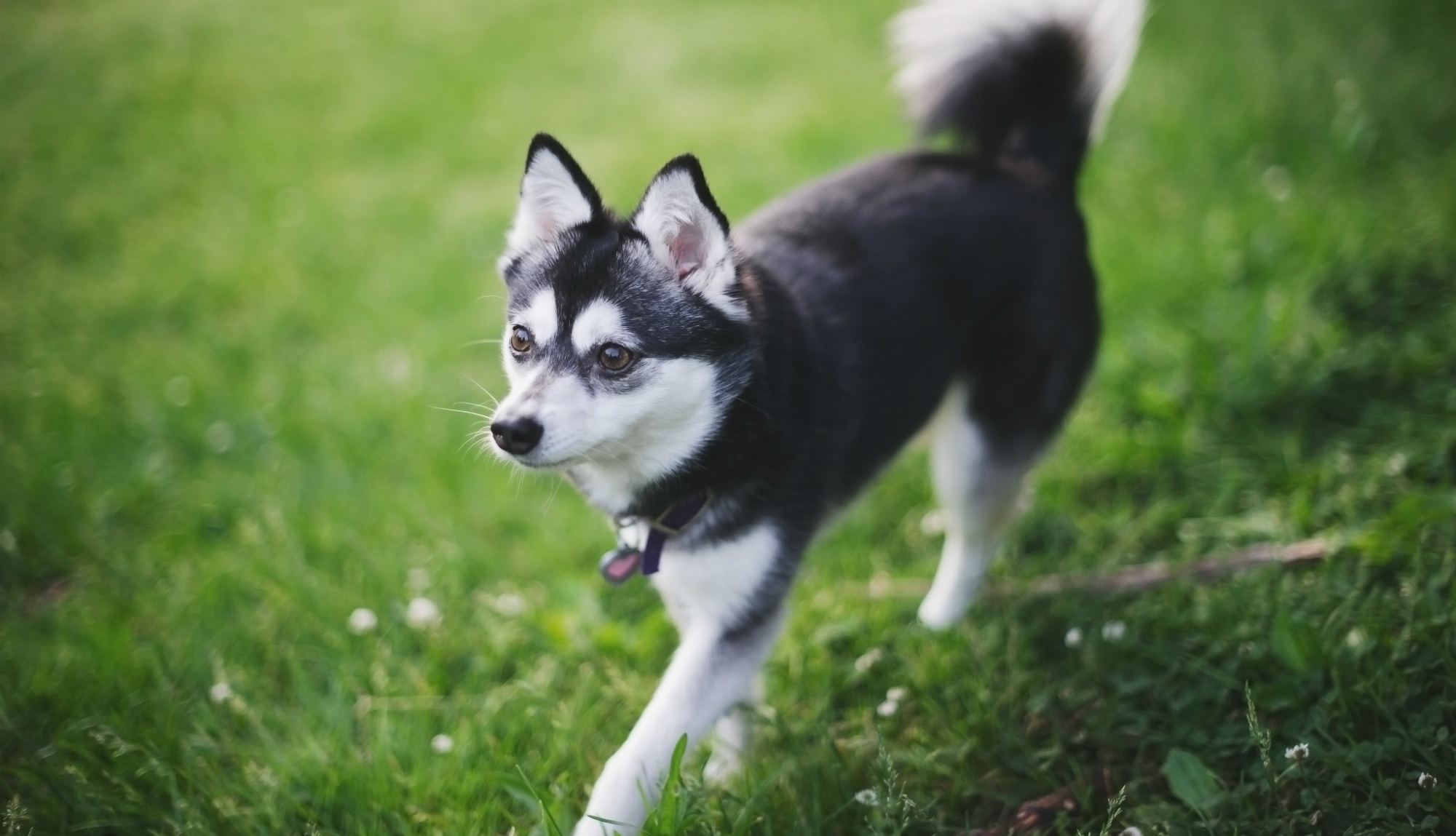
Alaskan Klee Kai

Temperament: Bright, active, and alert. Alaskan Klee Kai are small northern-type dogs with strong watchdog instincts and a tendency to be vocal. They are devoted to their people but can be reserved or standoffish with strangers, and they need real mental stimulation and exercise despite their size.
Height: Three sizes are recognized: Toy (up to 13 inches / 33 cm), Miniature (over 13 up to 15 inches / 33-38 cm), and Standard (over 15 up to 17 inches / 38-43 cm).
Weight: 10-20 pounds (4.5-9 kg)
Life Span: 13-16 years
Outlier Index ?
0.22
Born before 2016: 0.21 Born after 2024: 0.21
Avg Genetic Rel. ?
0.00
Born before 2016: 0.01 Born after 2024: 0.05
Internal Relatedness ?
0.00
Born before 2016: 0.01 Born after 2024: -0.03
Alaskan Klee Kai
#NameGender OIAGRIR
1 PR Taylaks Foxx Legacy Tribute F 0.38 -0.06 -0.07
2 PR Regal's Manifest Destiny Foxx F 0.17 0.07 -0.18
3 Blue Sky's Danali @ Akkops M 0.24 -0.04 0.12
4 Foxx's Silver Teddy Bear v Akkops M 0.16 0.05 0.10
5 Foxx's Silver Misa v Akkops F 0.21 0.10 -0.15
6 Foxx's Wynning Ways At Aklokum F 0.26 0.00 -0.03
7 Timberlane's Deja Vu F 0.13 0.06 0.16
8 Ravn's Grand Depart Inca F 0.22 -0.03 0.05
9 PR FOXX's Wynn Your Heart F 0.20 -0.02 -0.13
10 Pockets Griffin M 0.22 -0.01 0.09
The Alaskan Klee Kai was developed in the 1970s by Linda Spurlin of Wasilla, Alaska, who wanted a small companion dog in the image of the Alaskan Husky. The foundation dog was a rescue named Curious, thought to be part Husky and part mixed breed. The breeding program drew on Siberian Huskies, Alaskan Huskies, a Schipperke, and an American Eskimo Dog to refine size down and fix type. The breed was recognized by the American Rare Breed Association in 1995 and by the United Kennel Club in 1997. The modern worldwide population descends from Spurlin's work and a handful of subsequent breeders, which gives the breed a tight founder base that shows in its genetic profile.
As a relatively new breed built from a small founder pool, the Alaskan Klee Kai has not accumulated a long list of formally characterized genetic diseases, but the usual northern-breed risks apply. Cardiac issues, particularly juvenile cataracts and progressive retinal atrophy, luxating patella, and thyroid disorders have been reported. Breeders should stay alert to any patterns emerging as the population matures.
VGL has reported Alaskan Klee Kai carrying an average of around 5.76 alleles across the 33 STR loci, with an effective allele count near 2.66. Both numbers reflect the breed's tight founder base and recent origins. In a population this constrained, preserving the rarer alleles through thoughtful pairings matters more than in a broader breed. VGL testing has found Alaskan Klee Kai with observed heterozygosity close to expected, giving an inbreeding coefficient near zero. That is a good signal at the breed-wide level and suggests breeders are doing a reasonable job of spreading what diversity exists. The catch is the underlying pool is narrow to begin with, given the breed's recent development from a handful of founders.

Average metrics by birth year for dogs with recorded birthdates in the BetterBred database.

A 3D genetic map of enrolled Alaskan Klee Kai dogs in the BetterBred database, based on allele-sharing distance across 33 STR loci. This is not a complete picture of the breed — it reflects only dogs whose owners have enrolled them. Drag to rotate · scroll to zoom · hover for dog names (public profiles only).

Historical founders — oldest 25% of enrolled dogs     Current gene pool — most recent 50% of enrolled dogs
Building plot… this may take a minute for larger breeds.

The Dog Leukocyte Antigen (DLA) region controls immune function and is the most polymorphic portion of the canine genome. Every dog carries two sets of DLA haplotypes — one from each parent — which almost never recombine across generations. Frequency percentages reflect how often each haplotype appears across all allele copies in the breed, not the percentage of dogs carrying it.

Class I Haplotypes

HaplotypeFrequency
1014
34.8%
1040
22.3%
1062
22.0%
1008
6.1%
1011
5.4%
1061
5.2%
1064
2.0%
1063
1.1%
1060
0.8%
1072
0.3%

Class II Haplotypes

HaplotypeFrequency
2037
34.8%
2021
22.7%
2043
22.3%
2014
7.2%
2012
5.8%
2042
5.2%
2007
2.0%

Class I & II Combinations

Class IClass IIFrequency
1014 2037
34.6%
1040 2043
22.2%
1062 2021
21.5%
1008 2014
6.1%
1011 2012
5.4%
1061 2042
5.1%
1064 2007
2.0%
1063 2014
1.1%
1060 2021
0.8%
1062 2012
0.4%
1072 2021
0.3%

The Canine Diversity Test from UC Davis Veterinary Genetics Laboratory is the foundation of BetterBred’s breed management tools. Testing your dog adds to the breed database and gives you access to the full suite of breeding analysis tools.

Order from UC Davis VGL →