Breed Page

American Akita — BetterBred Breed Page – BetterBred.com
BetterBred Breed Profile

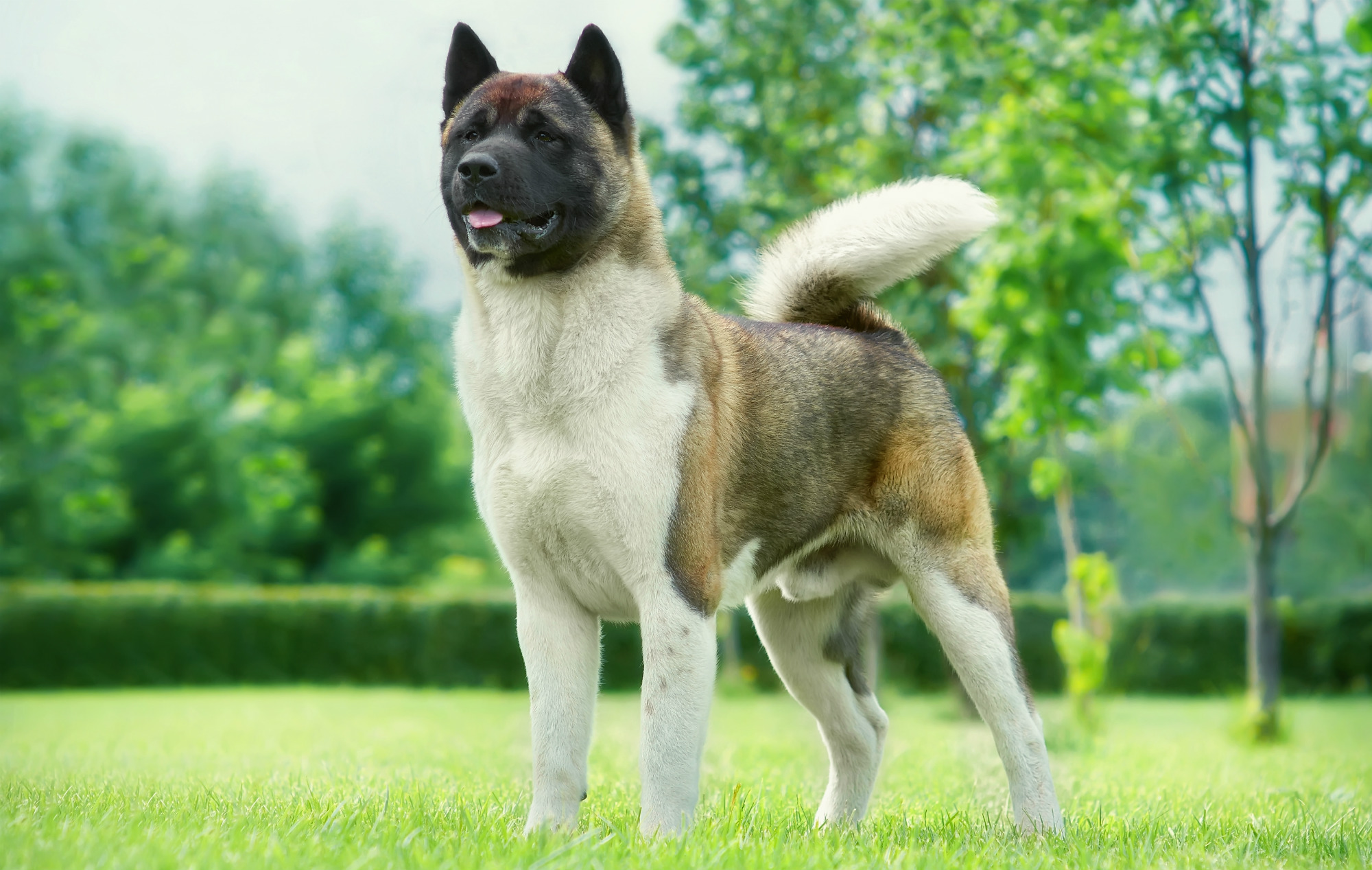
American Akita

Temperament: Loyal, courageous, and dignified, with a quietly watchful presence. American Akitas bond deeply to their people and can be reserved or selective with strangers. They need thoughtful early socialization, firm training, and an owner prepared for a serious dog - they are not casual pets.
Height: Males: 26-28 inches (66-71 cm), Females: 24-26 inches (61-66 cm)
Weight: Males: 100-130 pounds (45-59 kg), Females: 70-100 pounds (32-45 kg)
Life Span: 10-13 years
Outlier Index ?
0.31
Born before 2016: 0.32 Born after 2024:
Avg Genetic Rel. ?
-0.04
Born before 2016: -0.04 Born after 2024:
Internal Relatedness ?
0.04
Born before 2016: 0.05 Born after 2024:
American Akita
#NameGender OIAGRIR
1 Belladonna's Miss Atomic Bomb F 0.38 -0.11 0.07
2 Keaws micha chu sway F 0.27 0.06 -0.11
3 Keaws Beautiful Onyx Gem F 0.34 -0.05 0.02
4 Bear Claws Long Kiss Goodnight F 0.36 -0.02 -0.12
5 Bear Claws G I Jane F 0.27 0.03 -0.04
6 Bear Claws Fat Bottom Girl From Little River F 0.31 -0.04 0.18
7 Bear Claws Gatling Action M 0.35 -0.04 0.07
8 KB'S Casey Of Big Bear F 0.29 -0.04 -0.07
9 Bear Claws The Show Must Go On F 0.21 0.07 -0.15
10 Bear Claws Diamond Dust F 0.30 -0.08 0.17
The Akita traces its roots to the mountainous Akita prefecture of northern Japan, where spitz-type hunting and guarding dogs had existed for centuries. By the early 20th century the native Japanese dogs had been crossed extensively with imported Western breeds - Mastiff, German Shepherd, and others - producing a larger, more varied dog. After World War II, American servicemen brought these dogs back to the United States and developed them along their own lines, preserving the heavier Western-influenced type. In parallel, Japanese breeders pulled their population back toward the older native type, which became the Japanese Akita (Akita Inu). The two lines have been genetically separate for decades and are recognized as distinct breeds by the FCI and many registries, though the AKC continues to treat them as one breed. The American Akita is the larger, bulkier dog with a broader color range, reflecting its post-war American development.
Hip and elbow dysplasia, progressive retinal atrophy, hypothyroidism, and autoimmune conditions including sebaceous adenitis and autoimmune thyroiditis are the main concerns. Gastric dilatation-volvulus (bloat) is a significant risk given the deep chest. Akitas as a group are sensitive to certain drugs and anesthetics, and breeders should be aware of VKH-like uveodermatologic syndrome, which affects this breed at elevated rates.
VGL has reported American Akitas carrying an average of around 6.73 alleles across the 33 STR loci, with an effective allele count near 2.96. The gap between average and effective alleles is typical - a subset of common alleles dominates, and the rarer ones are the ones that need deliberate protection through breeding decisions. VGL testing has found American Akitas with observed heterozygosity close to expected, giving an inbreeding coefficient near zero. That is a reasonably good signal at the breed-wide level, though individual IR values still vary. The breed's split from the Japanese Akita and its post-war American development from a relatively narrow base mean breeders should stay attentive to maintaining diversity rather than assuming the current balance is self-sustaining.

Average metrics by birth year for dogs with recorded birthdates in the BetterBred database.

A 3D genetic map of enrolled American Akita dogs in the BetterBred database, based on allele-sharing distance across 33 STR loci. This is not a complete picture of the breed — it reflects only dogs whose owners have enrolled them. Drag to rotate · scroll to zoom · hover for dog names (public profiles only).

Historical founders — oldest 25% of enrolled dogs     Current gene pool — most recent 50% of enrolled dogs
Building plot… this may take a minute for larger breeds.

The Dog Leukocyte Antigen (DLA) region controls immune function and is the most polymorphic portion of the canine genome. Every dog carries two sets of DLA haplotypes — one from each parent — which almost never recombine across generations. Frequency percentages reflect how often each haplotype appears across all allele copies in the breed, not the percentage of dogs carrying it.

Class I Haplotypes

HaplotypeFrequency
1081
42.0%
1082
18.8%
1029
13.8%
1083
13.0%
1006
3.6%
1061
2.2%
1087
2.2%
1040
1.5%
1067
1.5%
1052
0.7%
1133
0.7%

Class II Haplotypes

HaplotypeFrequency
2056
59.4%
2037
13.8%
2039
12.3%
2007
3.6%
2033
2.2%
2017
2.2%
2057
2.2%
2058
1.5%
2032
0.7%
2063
0.7%
2071
0.7%
2077
0.7%

Class I & II Combinations

Class IClass IIFrequency
1081 2056
41.9%
1082 2056
18.4%
1029 2037
14.0%
1083 2039
12.5%
1006 2007
3.7%
1061 2057
2.2%
1087 2033
2.2%
1040 2058
1.5%
1067 2017
1.5%
1081 2032
0.7%
1082 2071
0.7%
1083 2063
0.7%
Akita Club of America https://www.akitaclub.org

The Canine Diversity Test from UC Davis Veterinary Genetics Laboratory is the foundation of BetterBred’s breed management tools. Testing your dog adds to the breed database and gives you access to the full suite of breeding analysis tools.

Order from UC Davis VGL →