Breed Page

Biewer Terrier — BetterBred Breed Page – BetterBred.com
BetterBred Breed Profile

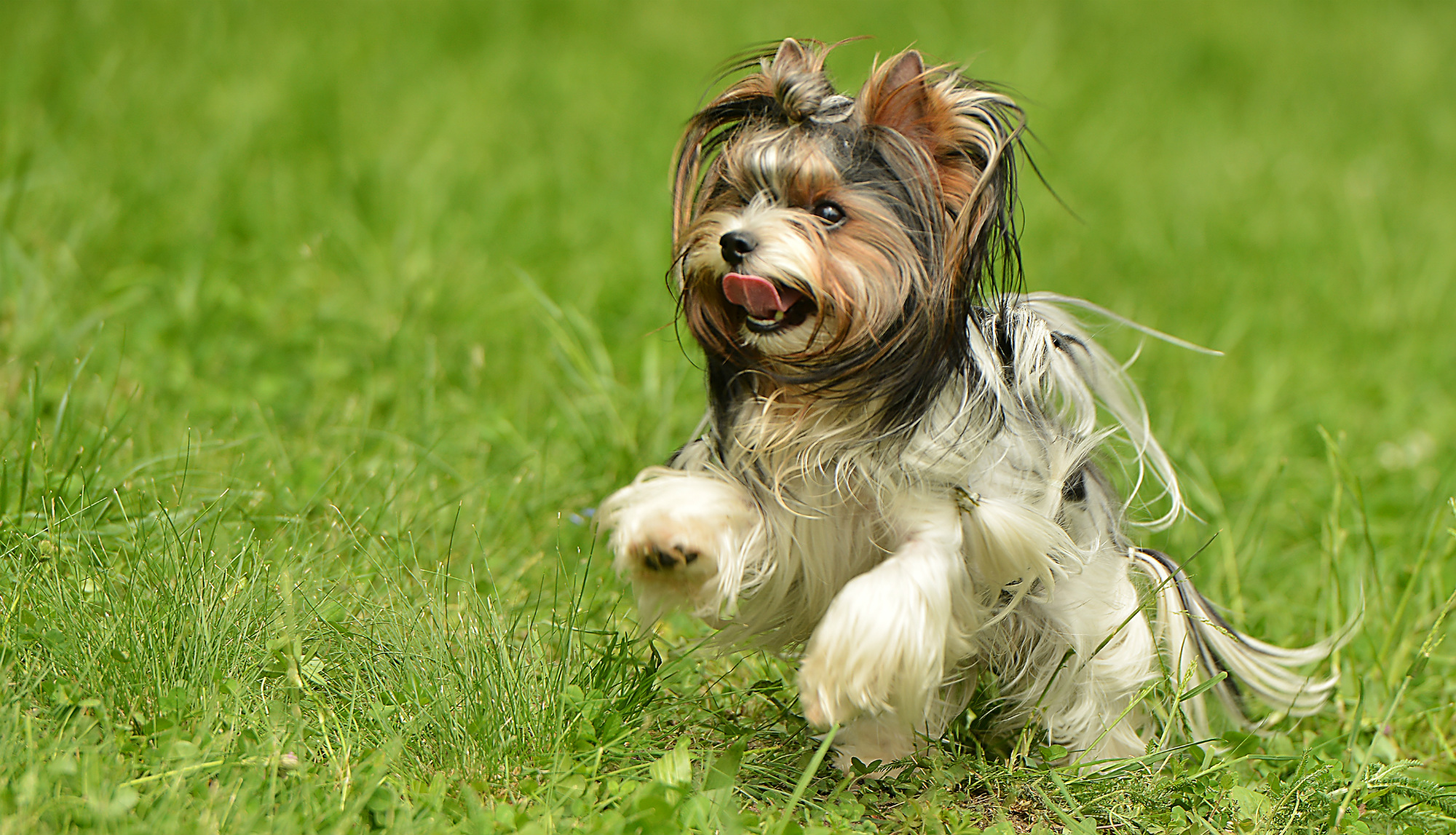
Biewer Terrier

Temperament: Affectionate, loyal, and brave for their size, Biewers are lively companion dogs with terrier energy and spaniel sweetness. Good with their families and other small dogs, they need thoughtful socialization around larger dogs and children. High grooming needs given the long silky coat.
Height: 7-11 inches (18-28 cm)
Weight: 4-8 pounds (1.8-3.6 kg)
Life Span: 13-16 years
Outlier Index ?
0.30
Born before 2016: 0.30 Born after 2024: 0.29
Avg Genetic Rel. ?
0.00
Born before 2016: -0.01 Born after 2024: 0.02
Internal Relatedness ?
0.01
Born before 2016: 0.00 Born after 2024: 0.02
Biewer Terrier
#NameGender OIAGRIR
1 Zinna Belle of Ameican Biewers F 0.27 0.04 -0.20
2 Lordy Logan of American Biewers M 0.21 0.02 0.29
3 The Rooster of American Biewers M 0.23 0.10 -0.12
4 Cool Luke of American Biewers M 0.29 -0.01 0.03
5 Whisper F 0.31 -0.01 -0.05
6 Grand Prince Snow Avalanche M 0.32 0.03 -0.10
7 Donday Dandy M 0.30 0.05 -0.21
8 Donday Greta F 0.44 -0.03 -0.04
9 Donday Bo Jangle's M 0.32 0.03 -0.12
10 Cooper of American Biewers M 0.23 0.03 0.12
Biewers - also called Biewer Terriers, Biewer Yorkshire Terriers, or simply Biewers - originated in Werner and Gertrud Biewer's Yorkshire Terrier kennel in Germany in the 1980s. The distinctive tri-color (black, white, and tan or gold) pattern first appeared in puppies the Biewers produced, with significant influence from an imported UK stud named Streamglen Richard. The origin of the pattern remains debated: possibilities include a spontaneous mutation, a latent recessive, or an earlier outcross to another breed. The Biewers themselves maintained that no outcross was involved. The Biewer kennel bred for the type they liked for five years before introducing new genetics. In the 2000s, American and German breeders continued using German Yorkshire Terrier outcrosses, as the Biewer kennel had done; that practice was ended in 2007. The AKC accepted the Biewer Terrier into the Foundation Stock Service in 2014, with full recognition following later.
As a relatively new and small breed, the Biewer Terrier has not accumulated a long list of formally characterized genetic diseases, but the usual toy-breed risks apply: patellar luxation, progressive retinal atrophy, dental disease, and portosystemic (liver) shunts occur. Legg-Calve-Perthes and tracheal collapse have also been reported. Breeders should stay attentive to any patterns emerging as the population grows.
VGL has reported Biewer Terriers carrying an average of around 7.79 alleles across the 33 STR loci, with an effective allele count near 3.46. Those numbers are similar to what many pure breeds show - respectable, but with a clear gap between average and effective alleles that points to the usual pattern of a subset of alleles dominating. The breed's recent origin from a small founder pool shows in the genetics, and redistributing rarer alleles should remain a priority. VGL testing has found Biewer Terriers with observed heterozygosity essentially equal to expected, giving an inbreeding coefficient near zero. That is a good breed-wide signal and suggests breeders are doing reasonable work redistributing what diversity the breed has. Individual IR values vary, and the breed's tight founder base means some dogs are considerably more inbred than the average suggests.

Average metrics by birth year for dogs with recorded birthdates in the BetterBred database.

A 3D genetic map of enrolled Biewer Terrier dogs in the BetterBred database, based on allele-sharing distance across 33 STR loci. This is not a complete picture of the breed — it reflects only dogs whose owners have enrolled them. Drag to rotate · scroll to zoom · hover for dog names (public profiles only).

Historical founders — oldest 25% of enrolled dogs     Current gene pool — most recent 50% of enrolled dogs
Building plot… this may take a minute for larger breeds.

The Dog Leukocyte Antigen (DLA) region controls immune function and is the most polymorphic portion of the canine genome. Every dog carries two sets of DLA haplotypes — one from each parent — which almost never recombine across generations. Frequency percentages reflect how often each haplotype appears across all allele copies in the breed, not the percentage of dogs carrying it.

Class I Haplotypes

HaplotypeFrequency
1030
47.7%
1012
23.0%
1040
8.8%
1019
7.1%
1014
4.8%
1005
2.1%
1046
1.8%
1104
1.1%
1131
0.9%
1008
0.7%
1016
0.7%
1043
0.5%
1105
0.4%
1117
0.2%
1115
0.2%

Class II Haplotypes

HaplotypeFrequency
2023
47.9%
2003
26.8%
2016
7.7%
2013
6.6%
2037
4.8%
2040
2.7%
2005
1.8%
2081
1.1%
2083
0.4%
2074
0.2%
2084
0.2%

Class I & II Combinations

Class IClass IIFrequency
1030 2023
47.7%
1012 2003
22.9%
1019 2016
7.1%
1040 2013
6.6%
1014 2037
4.8%
1005 2003
2.1%
1040 2040
2.0%
1046 2005
1.8%
1104 2081
1.1%
1131 2003
0.9%
1016 2040
0.7%
1008 2003
0.7%
1043 2016
0.5%
1105 2083
0.4%
1040 2084
0.2%
1012 2023
0.2%
1115 2003
0.2%
1117 2074
0.2%

The Canine Diversity Test from UC Davis Veterinary Genetics Laboratory is the foundation of BetterBred’s breed management tools. Testing your dog adds to the breed database and gives you access to the full suite of breeding analysis tools.

Order from UC Davis VGL →
Donday
Washington, US
Visit Website →

BetterBred does not personally endorse or recommend any listed kennel. Visitors are responsible for conducting their own research, including verifying health testing records and speaking directly with breeders. List your kennel →