Breed Page

Black Russian Terrier — BetterBred Breed Page – BetterBred.com
BetterBred Breed Profile

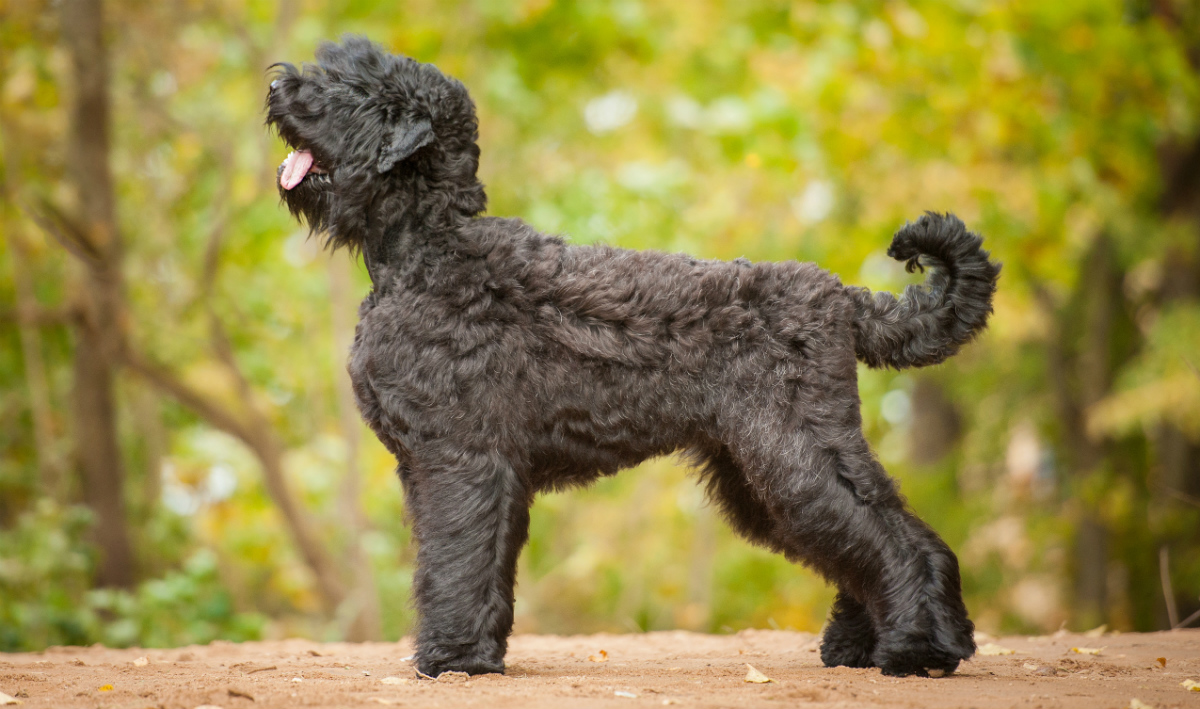
Black Russian Terrier

Temperament: Confident and courageous, with a calm presence around family and a natural wariness of strangers. BRTs can be stubborn and need a thoughtful, firm handler. They are somewhat active and genuinely playful, but they settle easily in the house. The double coat needs weekly grooming.
Height: Males: 27-30 inches (69-76 cm), Females: 26-29 inches (66-74 cm)
Weight: 80-130 pounds (36-59 kg)
Life Span: 9-13 years
Outlier Index ?
0.33
Born before 2016: 0.32 Born after 2024: 0.42
Avg Genetic Rel. ?
0.02
Born before 2016: 0.01 Born after 2024: 0.05
Internal Relatedness ?
0.02
Born before 2016: 0.03 Born after 2024: 0.02
Black Russian Terrier
#NameGender OIAGRIR
1 MidnightSolo Pride N Joy F 0.30 -0.03 0.03
2 MidnightSolo Read Between the Lines F 0.31 0.02 0.16
3 Black Beard's Go Where You Wanna Go M 0.22 0.05 0.30
4 Midnightsolo Infinite Harmony M 0.32 0.00 0.10
5 Especially Brave MB of Cameron M 0.38 0.03 -0.06
6 Naissur Black Velvet If You Please At Black Beard F 0.28 0.02 0.10
7 Black Beard's Live Like It's Your Last Day M 0.26 0.06 0.05
8 Black Beard's Meatloaf M 0.48 0.03 0.01
9 Black Beard's Supertramp M 0.36 0.06 0.04
10 Black Beard's Ratibor M 0.39 0.08 -0.03
The Black Russian Terrier was created in the Soviet Union in the 1940s and 50s by the Red Star (Krasnaya Zvezda) military kennel, which was tasked with developing a large, weather-hardy working dog for Soviet military and police use. Red Star drew on Airedale, Giant Schnauzer, Rottweiler, Newfoundland, Caucasian Shepherd Dog, and several other breeds to build the foundation stock. Dogs were released to civilian breeders in 1957, and the breed began to settle into a more consistent type and appearance. The first breed standard was published in 1958. From there the BRT spread internationally and has been recognized by FCI, AKC, CKC, and other registries. The modern breed descends from a deliberately engineered foundation, which shows in both its physical consistency and its genetic profile.
Hip and elbow dysplasia are significant concerns given the breed's size and construction. Ophthalmological issues including progressive retinal atrophy and juvenile cataracts occur. Hyperuricosuria (DNA test available), urticarial vasculitis, and ovarian cancer have been reported. Like other large deep-chested breeds, BRTs are at elevated risk for gastric dilatation-volvulus (bloat).
VGL has reported Black Russian Terriers carrying an average of around 6.48 alleles across the 33 STR loci, with an effective allele count near 3.48. Those numbers are respectable and reflect the multi-breed foundation that went into the breed's creation. A subset of common alleles still dominates, as in most breeds, and the rarer ones need deliberate preservation. VGL testing has found Black Russian Terriers with observed heterozygosity close to expected, giving an inbreeding coefficient near zero. That is a good breed-wide signal. Individual IR values still vary widely, and the breed's engineered foundation means a handful of lines can have outsized genetic influence - worth watching in breeding decisions.

Average metrics by birth year for dogs with recorded birthdates in the BetterBred database.

A 3D genetic map of enrolled Black Russian Terrier dogs in the BetterBred database, based on allele-sharing distance across 33 STR loci. This is not a complete picture of the breed — it reflects only dogs whose owners have enrolled them. Drag to rotate · scroll to zoom · hover for dog names (public profiles only).

Historical founders — oldest 25% of enrolled dogs     Current gene pool — most recent 50% of enrolled dogs
Building plot… this may take a minute for larger breeds.

The Dog Leukocyte Antigen (DLA) region controls immune function and is the most polymorphic portion of the canine genome. Every dog carries two sets of DLA haplotypes — one from each parent — which almost never recombine across generations. Frequency percentages reflect how often each haplotype appears across all allele copies in the breed, not the percentage of dogs carrying it.

Class I Haplotypes

HaplotypeFrequency
1091
51.2%
1092
22.6%
1006
13.1%
1093
6.0%
1095
2.4%
1160
2.4%
1014
1.2%
1094
1.2%

Class II Haplotypes

HaplotypeFrequency
2033
51.2%
2037
23.8%
2007
13.1%
2032
6.0%
2031
2.4%
2060
2.4%
2005
1.2%

Class I & II Combinations

Class IClass IIFrequency
1091 2033
51.2%
1092 2037
22.6%
1006 2007
13.1%
1093 2032
6.0%
1095 2031
2.4%
1160 2060
2.4%
1014 2037
1.2%
1094 2005
1.2%

The Canine Diversity Test from UC Davis Veterinary Genetics Laboratory is the foundation of BetterBred’s breed management tools. Testing your dog adds to the breed database and gives you access to the full suite of breeding analysis tools.

Order from UC Davis VGL →
Seven Oaks Kennels
Tennessee/Florida, US
Visit Website →

BetterBred does not personally endorse or recommend any listed kennel. Visitors are responsible for conducting their own research, including verifying health testing records and speaking directly with breeders. List your kennel →