Breed Page

Borzoi — BetterBred Breed Page – BetterBred.com
BetterBred Breed Profile

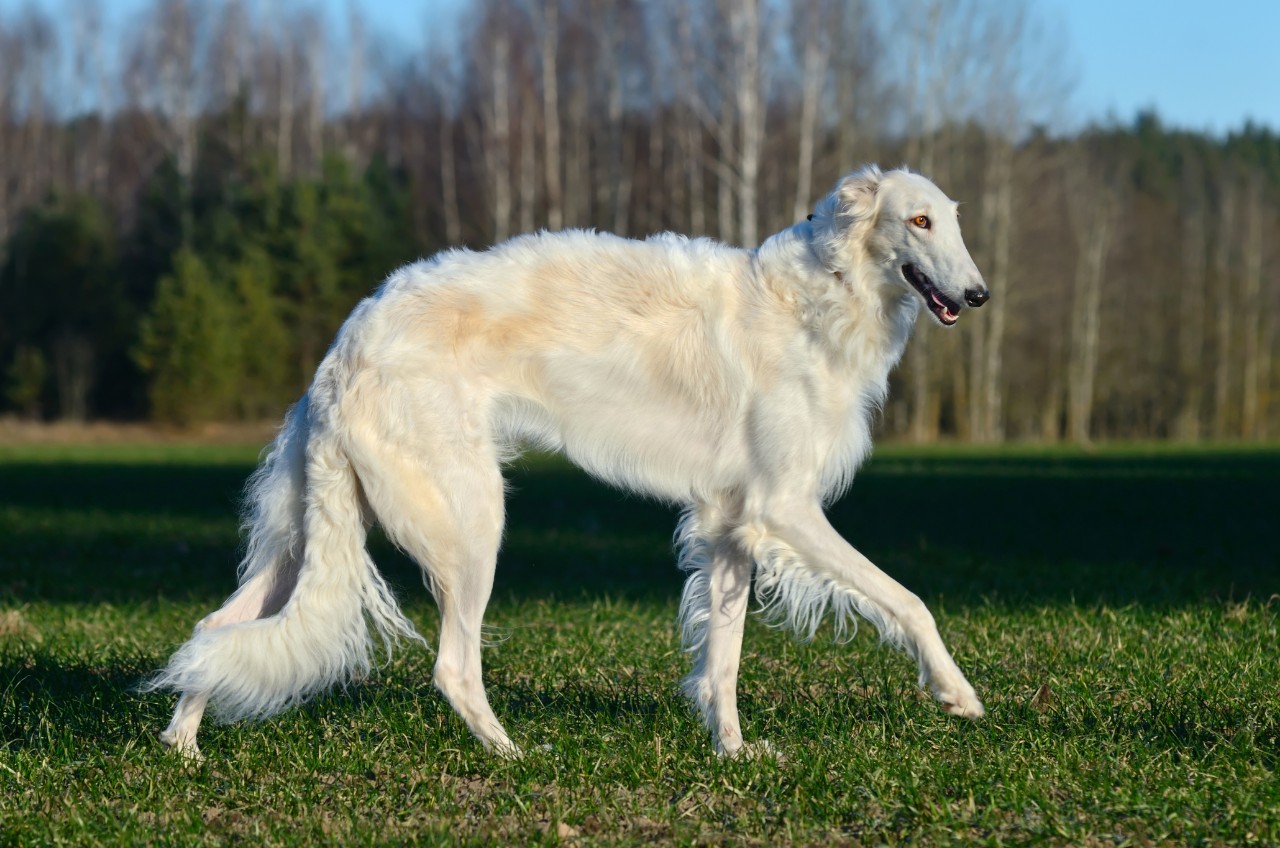
Borzoi

Temperament: Dignified, affectionate, and quietly independent. Borzoi are classic sighthounds with keen prey drive and the serene presence of a dog bred for Russian aristocratic estates. They are gentle with family, reserved with strangers, and need space to move. Not demonstrative but deeply bonded to their people.
Height: Males: 28 inches (71 cm) or more, Females: 26 inches (66 cm) or more
Weight: Males: 75-105 pounds (34-48 kg), Females: 60-85 pounds (27-39 kg)
Life Span: 9-13 years
Outlier Index ?
0.34
Born before 2016: 0.34 Born after 2024: 0.29
Avg Genetic Rel. ?
-0.02
Born before 2016: -0.03 Born after 2024: -0.03
Internal Relatedness ?
0.04
Born before 2016: 0.05 Born after 2024: 0.11
Borzoi
#NameGender OIAGRIR
1 Wild Rushes Saxafrax Then We'll Go Dancing M 0.33 -0.03 0.13
2 Wild Rushes Saxafrax Meant For The Stage M 0.41 -0.01 -0.13
3 Rezance Nighthawks M 0.21 0.00 0.06
4 Tryasina Queen of the Rodeo F 0.35 -0.02 0.12
5 Teine Rose Des Vents F 0.31 -0.08 0.14
6 Orion's Little Arrow F 0.50 -0.15 0.11
7 Piotr of Iyengar M 0.34 0.05 -0.15
8 Cedar Mountain Natasha F 0.34 -0.05 0.05
9 Rezance Satara Maid of Amsterdam F 0.30 0.01 -0.15
10 Akanni K-C Undisclosed Desires F 0.28 0.04 0.06
The Borzoi - originally called the Russian Wolfhound - was the traditional hunting dog of the Russian aristocracy, used in elaborate mounted wolf hunts on large estates from at least the 17th century. The breed was devastated by the Russian Revolution, when many Borzoi were killed along with their owners or because of their association with the old regime. Fortunately, Borzoi had been exported to Europe, England, and America in the decades before the Revolution, and those populations preserved the breed through the 20th century. The name changed to Borzoi (from Russian borzyi, "swift") starting in America in 1936.
Dilated cardiomyopathy and other heart disease, gastric dilatation-volvulus (bloat), and hypothyroidism are the main concerns. Cancer, particularly osteosarcoma, also occurs. Sighthounds as a group are sensitive to anesthesia, and breeders should be aware of that.
VGL has reported Borzoi carrying an average of around 6.64 alleles across the 33 STR loci, with an effective allele count near 3.41. Those are moderate numbers - not as tight as the most bottlenecked sighthound breeds but reflecting a clear founder effect. The usual pattern of a dominant subset of alleles applies, and rarer ones deserve deliberate preservation. VGL testing has found Borzoi with observed heterozygosity slightly below expected, giving a modestly positive inbreeding coefficient. That reflects the breed's 20th-century bottlenecks and the dominant influence of certain kennels in the post-Revolution restoration. Breeders have room to prioritize less related pairings and look beyond the most influential lines.

Average metrics by birth year for dogs with recorded birthdates in the BetterBred database.

A 3D genetic map of enrolled Borzoi dogs in the BetterBred database, based on allele-sharing distance across 33 STR loci. This is not a complete picture of the breed — it reflects only dogs whose owners have enrolled them. Drag to rotate · scroll to zoom · hover for dog names (public profiles only).

Historical founders — oldest 25% of enrolled dogs     Current gene pool — most recent 50% of enrolled dogs
Building plot… this may take a minute for larger breeds.

The Dog Leukocyte Antigen (DLA) region controls immune function and is the most polymorphic portion of the canine genome. Every dog carries two sets of DLA haplotypes — one from each parent — which almost never recombine across generations. Frequency percentages reflect how often each haplotype appears across all allele copies in the breed, not the percentage of dogs carrying it.

Class I Haplotypes

HaplotypeFrequency
1160
58.3%
1006
14.6%
1215
6.8%
1159
5.3%
1033
4.4%
1216
4.4%
1094
1.5%
1111
1.5%
1206
1.0%
1219
1.0%
1233
0.5%
1241
0.5%
1217
0.5%

Class II Haplotypes

HaplotypeFrequency
2022
58.7%
2007
15.1%
2006
8.7%
2029
8.3%
2116
4.4%
2024
1.5%
2047
1.0%
2072
1.0%
2098
1.0%
2066
0.5%

Class I & II Combinations

Class IClass IIFrequency
1160 2022
58.8%
1006 2007
14.7%
1215 2029
6.9%
1159 2006
5.4%
1216 2116
4.4%
1033 2006
3.4%
1094 2024
1.5%
1111 2029
1.5%
1033 2072
1.0%
1206 2047
1.0%
1219 2098
1.0%
1217 2022
0.5%
1233 2007
0.5%
1241 2066
0.5%

The Canine Diversity Test from UC Davis Veterinary Genetics Laboratory is the foundation of BetterBred’s breed management tools. Testing your dog adds to the breed database and gives you access to the full suite of breeding analysis tools.

Order from UC Davis VGL →