Breed Page

Doberman Pinscher — BetterBred Breed Page – BetterBred.com
BetterBred Breed Profile

Doberman Pinscher

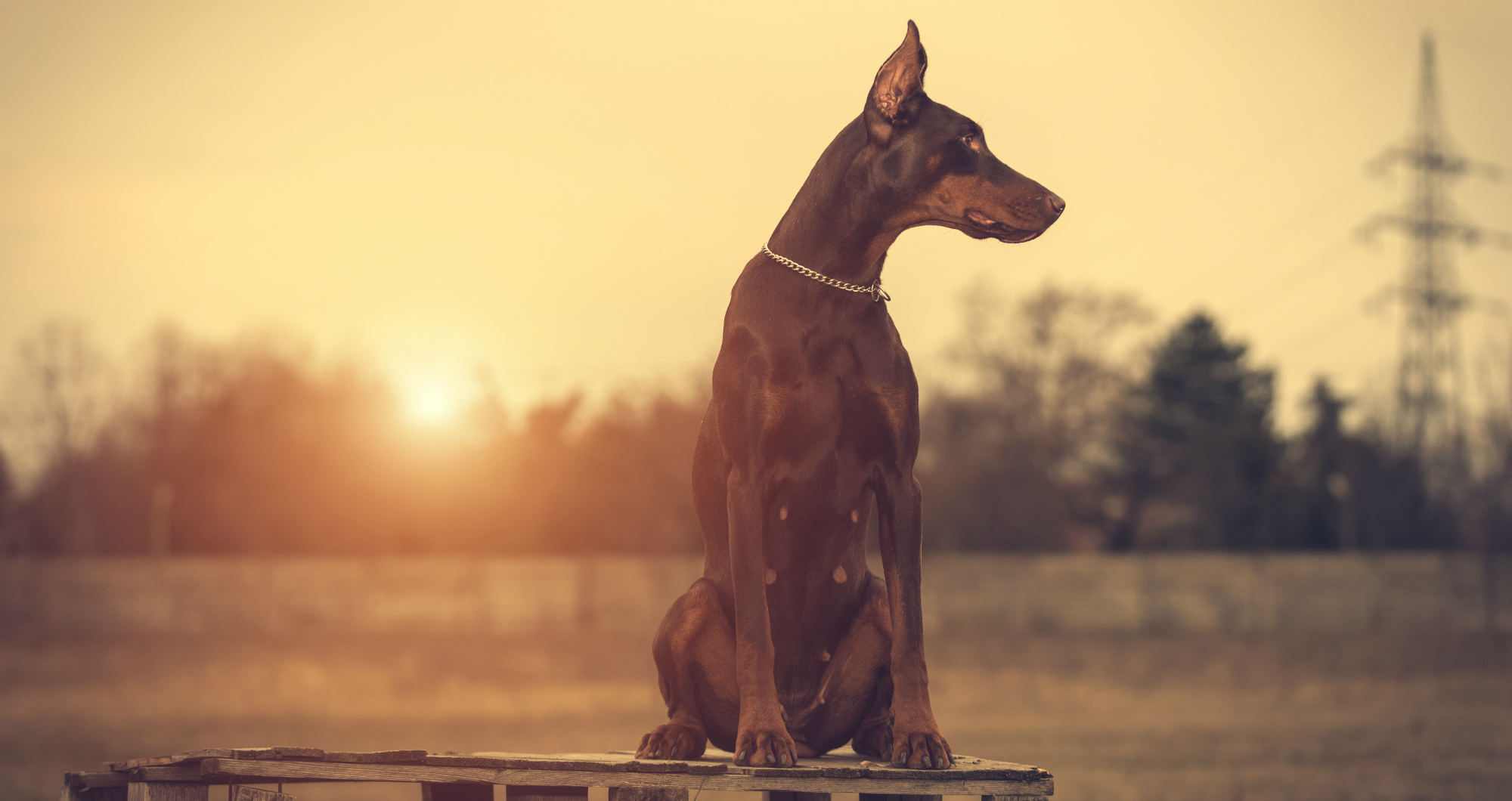
Temperament: Alert, loyal, and highly trainable. Dobermans are intensely bonded to their people and thrive on having a job to do. They need significant daily exercise and mental engagement, and they benefit from early training and thoughtful socialization. Protective by temperament, but should not be aggressive - a stable Doberman is confident and even.
Height: Males: 26-28 inches (66-71 cm), Females: 24-26 inches (61-66 cm)
Weight: Males: 75-100 pounds (34-45 kg), Females: 60-90 pounds (27-41 kg)
Life Span: 7-12 years
Outlier Index ?
0.16
Born before 2016: 0.16 Born after 2024: 0.16
Avg Genetic Rel. ?
-0.04
Born before 2016: -0.05 Born after 2024: -0.03
Internal Relatedness ?
0.07
Born before 2016: 0.10 Born after 2024: 0.05
Doberman Pinscher
#NameGender OIAGRIR
1 Imprint's Sotto Voce de Ekoh a.v. Mariah CGC TKN ATT F 0.13 -0.19 0.46
2 Bell'Lavoro Mondo Di Fiamme M 0.16 0.04 -0.12
3 Garjan's Legend Keepsake v Tersel F 0.13 -0.07 0.19
4 Cristobel v. Ostblock F 0.06 0.04 0.15
5 A20 CH SUP CH Copperdobe Rayz A Riot (AI) (IMP NZ) M 0.20 -0.02 -0.17
6 CH Coppertop Perfect Encounter M 0.12 0.00 0.13
7 Sonza Always Smiling F 0.20 -0.11 0.17
8 Emerald Eire's Raven the Riot F 0.17 -0.06 -0.05
9 Emerald Eire's Hazmat F 0.27 -0.12 -0.09
10 Emerald Eire's Enigma v Tycho M 0.27 -0.14 -0.06
The Doberman Pinscher was developed in Germany in the 1880s and 90s by Karl Friedrich Louis Dobermann, a tax collector and dogcatcher who wanted a protection dog to accompany him through his work. The breed was built from a mix of dogs believed to include German Pinscher, Rottweiler, Black and Tan Terrier, Greyhound, and possibly others - Dobermann did not keep detailed records. The goal was a dog that combined protectiveness, loyalty, trainability, and physical capability. The Dobermann Pinscher Club of Germany was founded in 1899, and the AKC recognized the breed in 1908. Both World Wars caused severe genetic bottlenecks, particularly in Germany and continental Europe, and the modern breed has been rebuilt largely from American lines with continuing influence from limited European stock.
Dilated cardiomyopathy is the most serious concern in the breed, with a documented prevalence well above most breeds and a strong genetic component under active research. Cancer, particularly osteosarcoma and lymphoma, also occurs at elevated rates. Cervical vertebral instability (Wobbler syndrome), von Willebrand disease (DNA test available), hypothyroidism, autoimmune disease, and juvenile renal dysplasia are also concerns. Gastric dilatation-volvulus (bloat) is a risk given the deep chest.
VGL has reported Dobermans carrying an average of around 7.97 alleles across the 33 STR loci, with an effective allele count near 2.32. The gap between average and effective alleles is large - the breed carries allelic variety on paper, but a small subset of common alleles is doing most of the genetic work. Genetic analysis has found that American Dobermans effectively encompass the genetics of most European and Australian dogs, though Australia may be developing some distinct genetics of its own. VGL testing has found Dobermans with observed heterozygosity noticeably below expected, giving a positive inbreeding coefficient. That is a real signal of meaningful breed-wide inbreeding, consistent with the severe post-war bottlenecks and heavy popular-sire effects in the breed's modern history. Breeders have real room to improve the breed's genetic position by deliberately seeking less related pairings and supporting outlier bloodlines where they still exist.

Average metrics by birth year for dogs with recorded birthdates in the BetterBred database.

A 3D genetic map of enrolled Doberman Pinscher dogs in the BetterBred database, based on allele-sharing distance across 33 STR loci. This is not a complete picture of the breed — it reflects only dogs whose owners have enrolled them. Drag to rotate · scroll to zoom · hover for dog names (public profiles only).

Historical founders — oldest 25% of enrolled dogs     Current gene pool — most recent 50% of enrolled dogs
Building plot… this may take a minute for larger breeds.

The Dog Leukocyte Antigen (DLA) region controls immune function and is the most polymorphic portion of the canine genome. Every dog carries two sets of DLA haplotypes — one from each parent — which almost never recombine across generations. Frequency percentages reflect how often each haplotype appears across all allele copies in the breed, not the percentage of dogs carrying it.

Class I Haplotypes

HaplotypeFrequency
1094
72.8%
1030
10.4%
1017
8.0%
1016
2.9%
1150
2.7%
1040
1.1%
1264
0.6%
1174
0.5%
1159
0.3%
1091
0.2%
0
0.1%
1116
0.1%
1052
0.1%
1190
0.0%
1160
0.0%
1214
0.0%
1012
0.0%
1105
0.0%
1075
0.0%
1068
0.0%
1065
0.0%
1062
0.0%
1114
0.0%

Class II Haplotypes

HaplotypeFrequency
2089
76.1%
2023
10.4%
2090
8.0%
2091
2.6%
2039
1.0%
2112
0.4%
2092
0.3%
2014
0.2%
2033
0.2%
2094
0.2%
2053
0.1%
2022
0.1%
0
0.1%
2087
0.1%
2060
0.0%
2003
0.0%
2011
0.0%
2072
0.0%
2048
0.0%
2047
0.0%
2040
0.0%
2024
0.0%

Class I & II Combinations

Class IClass IIFrequency
1094 2089
72.4%
1030 2023
10.4%
1017 2090
7.7%
1150 2089
2.7%
1016 2091
2.6%
1040 2039
0.9%
1264 2089
0.6%
1174 2089
0.5%
1094 2112
0.4%
1094 2092
0.3%
1159 2090
0.3%
1016 2014
0.2%
1091 2033
0.2%
1017 2094
0.2%
1017 2089
0.1%
1052 2022
0.1%
1116 2087
0.1%
1068 2053
0.0%
1091 2053
0.0%
1040 2011
0.0%
1105 2024
0.0%
1114 2072
0.0%
1017 2047
0.0%
1160 2060
0.0%
1016 2089
0.0%
1190 2090
0.0%
1214 2089
0.0%
1012 2053
0.0%

The Canine Diversity Test from UC Davis Veterinary Genetics Laboratory is the foundation of BetterBred’s breed management tools. Testing your dog adds to the breed database and gives you access to the full suite of breeding analysis tools.

Order from UC Davis VGL →
Sonza
Australian Capital Territory, AUS
Visit Website →
Redshift Dobermans
NSW, Australia
Visit Website →
Coppertop
Victoria, Australia
Visit Website →
Schwarzer Stolz
QC, Canada
Visit Website →
BOLCANSTERN
France
Visit Website →
Haverhill
South Africa
Visit Website →
Key To My Heart Dobermans
Florida, United States
Visit Website →
Poesia Dobermans
Idaho, United States
Visit Website →
Kansa Dobermans
Kansas, United States
Visit Website →
SolStorm Dobermanns
Kentucky, United States
Visit Website →
High Mark Dobermans
Minnesota, United States
Visit Website →
Lanser Dobermans
Tennessee, United States
Treasured Dobermans
Wisconsin, United States
von Conklin
Nevada, US
Visit Website →
Beja Dobermans
New York, US
Visit Website →
Shelian Dobermans
South Carolina, US
Visit Website →
Daily Dobermans
Arizona, USA
We have had Dobermans throughout our lives and started breeding in 2013. Our goal is to produce healthy, happy Dobermans that adhere to the AKC Standard. In our breeding choices we look to increase diversity, longevity and health. Our dogs are a blend of European, American and South American lines with good bone, strong prey and ball drive and excellent temperaments.
Visit Website →
Iconic Dobermans
Iconic Dobermans
California, USA
Visit Website →
Garjan Dobermans
Michigan, USA
Visit Website →

BetterBred does not personally endorse or recommend any listed kennel. Visitors are responsible for conducting their own research, including verifying health testing records and speaking directly with breeders. List your kennel →