Breed Page

Flat Coated Retriever — BetterBred Breed Page – BetterBred.com
BetterBred Breed Profile

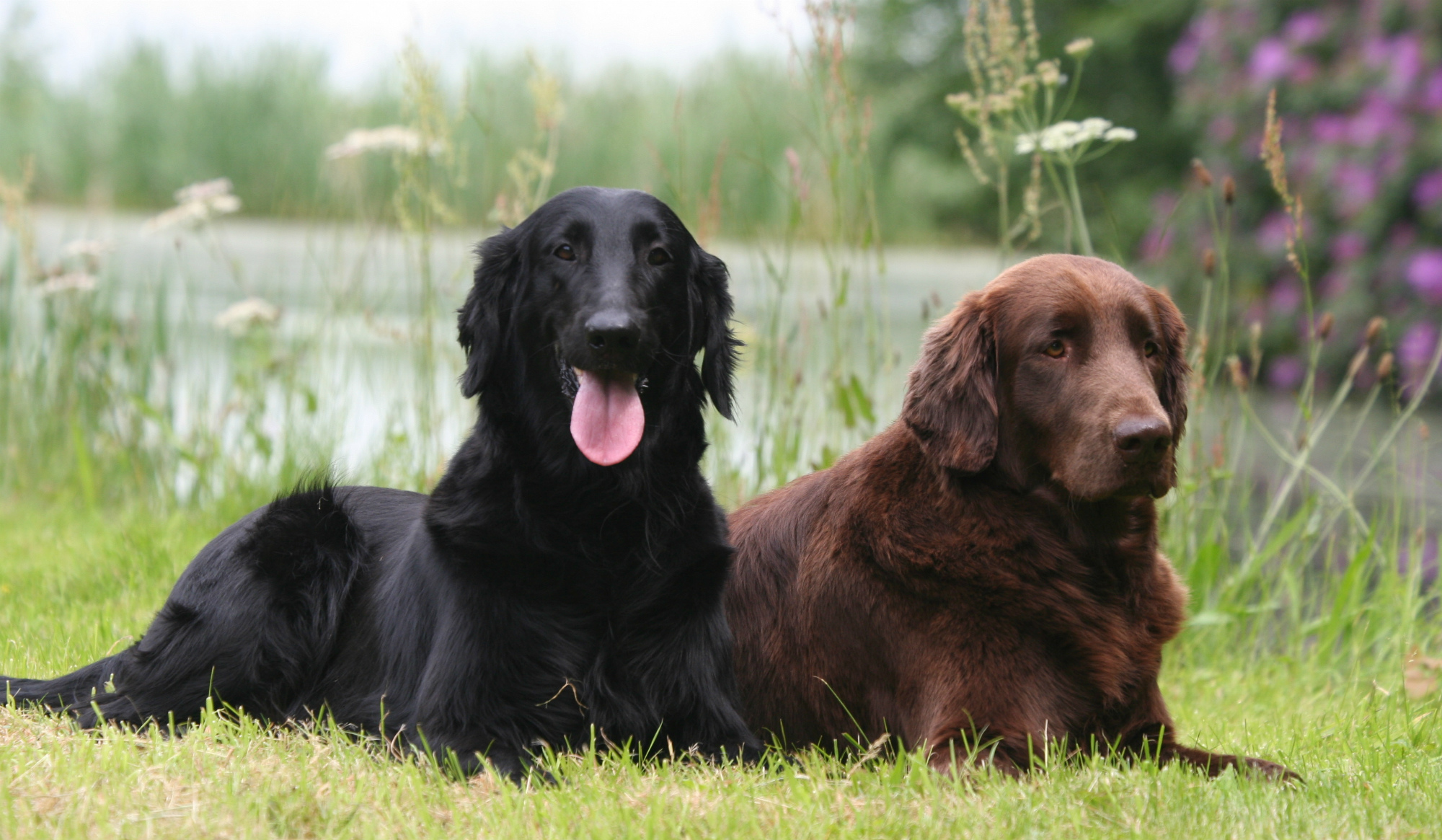
Flat Coated Retriever

Temperament: Happy, confident, and highly biddable. Flat-Coated Retrievers are active working gun dogs - they retain strong retrieving drive and need real daily work or exercise to be at their best. Good with children and other dogs, intelligent and trainable, with a famously cheerful disposition. Sheds seasonally and needs regular grooming.
Height: Males: 23-24.5 inches (58-62 cm), Females: 22-23.5 inches (56-60 cm)
Weight: 60-70 pounds (27-32 kg)
Life Span: 10-13 years
Outlier Index ?
0.24
Born before 2016: 0.25 Born after 2024: 0.18
Avg Genetic Rel. ?
0.00
Born before 2016: -0.01 Born after 2024: 0.02
Internal Relatedness ?
0.01
Born before 2016: 0.02 Born after 2024: 0.14
Flat Coated Retriever
#NameGender OIAGRIR
1 Blacfriar Aurora's Spirit Over Otter Cliffs F 0.41 -0.08 -0.06
2 Northwood's Cheeseburger In Paradise M 0.23 -0.07 0.25
3 CGH AM GCH Knightcastle Black Tie Affair M 0.27 -0.05 -0.08
4 Dare's Sail on Sailor M 0.22 0.02 -0.06
5 Blixthalka's Exploration Series F 0.24 -0.01 0.09
6 RUSH's Yet Again At Wynflat M 0.21 -0.06 0.22
7 Banquo Alley Cat Blues at Shalyn F 0.32 0.01 -0.17
8 Shalyn's Ice To Meet You M 0.15 0.09 -0.02
9 Almanza Color Me Happy at Bristol F 0.20 0.01 0.14
10 Bristol's Point Break at Sunset M 0.30 -0.01 -0.11
Flat-Coated Retrievers were developed in the UK in the mid-19th century as bird dogs, drawing on retrievers imported from North America - particularly the St. John's Water Dog and Newfoundland. The foundation also included Collie-type dogs and Setters. The breed was officially recognized in 1915. Numbers fell dramatically during and after both World Wars, with only a small population surviving into the post-war period. Careful management by dedicated breeders brought numbers back up, but the breed's modern gene pool reflects that severe 20th-century bottleneck.
Cancer is the defining health concern of the breed and a major driver of the short lifespan. Hemangiosarcoma, lymphoma, osteosarcoma, mast cell tumors, and histiocytic sarcoma all occur at elevated rates, with cancer accounting for a majority of deaths in the breed. Hip and elbow dysplasia, patellar luxation, and progressive retinal atrophy also occur. Gastric dilatation-volvulus (bloat) is a risk given the deep chest.
VGL has reported Flat-Coated Retrievers carrying an average of around 6.21 alleles across the 33 STR loci, with an effective allele count near 2.59. Both numbers are on the lower end, confirming the limited overall genetic diversity in the breed and reflecting the 20th-century bottlenecks. The relatively small gap between average and effective alleles shows the breed community has done a reasonably good job of retaining what diversity exists rather than letting it concentrate further. VGL testing has found Flat-Coated Retrievers with observed heterozygosity essentially equal to expected, giving an inbreeding coefficient near zero. That is a good breed-wide signal given the breed's tight post-war founder base - it suggests breeders have done real work to distribute diversity across what remains. Individual IR values still vary widely and breeders should stay focused on maintaining that balance rather than assuming it is self-sustaining.

Average metrics by birth year for dogs with recorded birthdates in the BetterBred database.

A 3D genetic map of enrolled Flat Coated Retriever dogs in the BetterBred database, based on allele-sharing distance across 33 STR loci. This is not a complete picture of the breed — it reflects only dogs whose owners have enrolled them. Drag to rotate · scroll to zoom · hover for dog names (public profiles only).

Historical founders — oldest 25% of enrolled dogs     Current gene pool — most recent 50% of enrolled dogs
Building plot… this may take a minute for larger breeds.

The Dog Leukocyte Antigen (DLA) region controls immune function and is the most polymorphic portion of the canine genome. Every dog carries two sets of DLA haplotypes — one from each parent — which almost never recombine across generations. Frequency percentages reflect how often each haplotype appears across all allele copies in the breed, not the percentage of dogs carrying it.

Class I Haplotypes

HaplotypeFrequency
1017
43.4%
1068
29.8%
1142
14.2%
1054
11.0%
1035
0.6%
1199
0.4%
1143
0.4%
1092
0.1%
1033
0.1%
1171
0.1%
1055
0.1%

Class II Haplotypes

HaplotypeFrequency
2005
40.6%
2053
15.6%
2003
15.0%
2018
14.2%
2022
11.5%
2014
2.8%
2083
0.1%
2066
0.1%

Class I & II Combinations

Class IClass IIFrequency
1017 2005
40.7%
1068 2053
15.1%
1068 2003
14.6%
1142 2018
14.0%
1054 2022
10.9%
1017 2014
2.8%
1035 2022
0.6%
1199 2003
0.4%
1143 2053
0.4%
1068 2018
0.2%
1092 2053
0.1%
1142 2083
0.1%
1055 2018
0.1%
1142 2005
0.1%
1054 2066
0.1%
1054 2053
0.1%
1171 2022
0.1%
1033 2003
0.1%
https://fcrsa.org/cancer-research-studies/
https://fcrsa.org/

The Canine Diversity Test from UC Davis Veterinary Genetics Laboratory is the foundation of BetterBred’s breed management tools. Testing your dog adds to the breed database and gives you access to the full suite of breeding analysis tools.

Order from UC Davis VGL →
Blazingstar Flat-Coated Retrievers
Alberta, CA
Visit Website →
Eagletarn Flat-Coated Retrievers
British Columbia, CA
Visit Website →
Radford Retrievers
British Columbia, CA
Visit Website →
Duenorth Flat-Coated Retrievers
Ontario, CA
Visit Website →
Highpoint flatcoated retrievers
British Columbia, Canada
Visit Website →
RUSH Reg’d Retrievers
Ontario, Canada
Visit Website →
Light-Foot
New Jersey, United States
Sanderling Flat-Coated Retrievers
California, US
Visit Website →
Wind Dancer Flat-coated Retrievers
California, US
Kingsbridge Flat-Coated Retrievers
Illinois, US
Visit Website →
Kistryl Flat-Coated Retrievers
Illinois, US
Visit Website →
Krieger's Ridge Kennels
Wisconsin, US
Visit Website →
Orenda Flat Coated Retrievers
Wisconsin, US
Visit Website →

BetterBred does not personally endorse or recommend any listed kennel. Visitors are responsible for conducting their own research, including verifying health testing records and speaking directly with breeders. List your kennel →