Breed Page

Greater Swiss Mountain Dog — BetterBred Breed Page – BetterBred.com
BetterBred Breed Profile

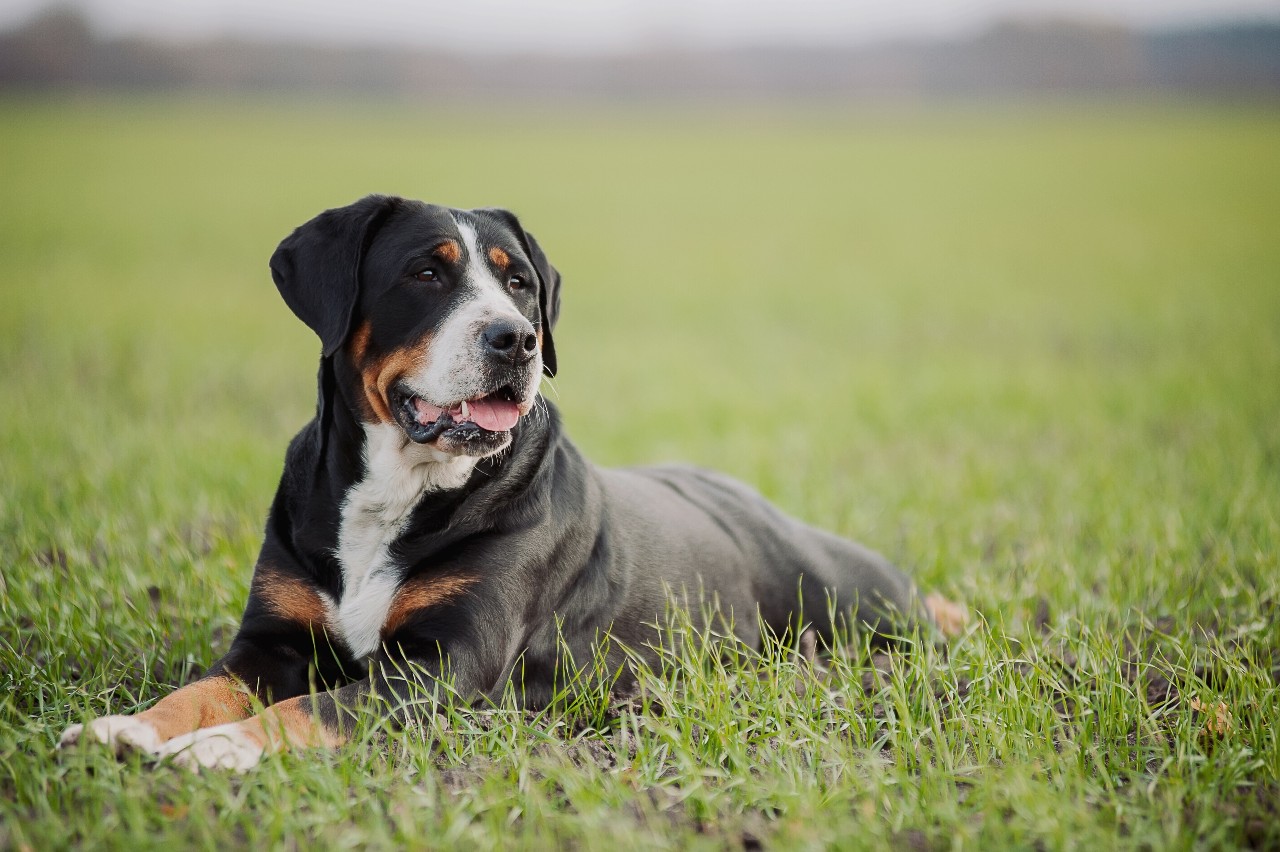
Greater Swiss Mountain Dog

Temperament: A true working farm dog, the Greater Swiss Mountain Dog (Swissy) is calm, willing, and extraordinarily strong. They are steady family companions who bond hard with their people, reserved with strangers, and generally good with children. Moderate daily exercise is sufficient for most dogs.
Height: Males: 25.5-28.5 inches (65-72 cm), Females: 23.5-27 inches (60-69 cm)
Weight: 115-140 pounds (52-64 kg) for males, 85-110 pounds (39-50 kg) for females
Life Span: 8-11 years
Outlier Index ?
0.38
Born before 2016: 0.38 Born after 2024:
Avg Genetic Rel. ?
0.00
Born before 2016: 0.01 Born after 2024:
Internal Relatedness ?
0.07
Born before 2016: 0.06 Born after 2024:
Greater Swiss Mountain Dog
#NameGender OIAGRIR
1 Simply Meant To Be M 0.39 -0.06 0.03
2 Simply Couldn't Walk Away F 0.36 -0.06 -0.06
3 Bred Gladnesss One M 0.60 -0.11 -0.06
4 Woodland Swissie's My Fair Lady F 0.50 -0.06 0.00
5 Callen's Snow After Fire F 0.52 -0.01 -0.19
6 Callen Strikes A Chord M 0.36 -0.04 0.16
7 Yovanni of Balihara Ranch M 0.33 -0.01 0.22
8 Aegis When Figs Fly M 0.47 -0.11 0.14
9 Sydney Jacwingowy Grod F 0.52 -0.06 -0.12
10 Land's End Gotta Have It M 0.41 -0.13 0.25
The Greater Swiss Mountain Dog is one of four Swiss mountain dog breeds (Sennenhunds) and the largest of them. Said to descend from dogs brought over the Alps by Roman legions, Swissies worked as general-purpose farm dogs in Switzerland - driving cattle, pulling carts of milk and produce to market, and guarding farm and family. Numbers fell dramatically with the mechanization of Swiss agriculture in the late 19th century, and the breed was nearly lost before being rebuilt by Swiss fanciers starting in the early 1900s. The first Swissies came to the United States in 1968 and the AKC recognized the breed in 1995. The modern population descends from a narrow founder base.
Gastric dilatation-volvulus (bloat) and splenic torsion are major concerns given the deep chest and size. Epilepsy, orthopedic issues including hip and elbow dysplasia and osteochondritis dissecans, urinary incontinence (especially in spayed females), and lick fit disorders occur. Cancer, while present, is not as prominent as in some other large breeds.
VGL has reported Greater Swiss Mountain Dogs carrying an average of around 4.47 alleles across the 33 STR loci, with an effective allele count near 2.22. Both numbers are on the lower end and reflect the severe 19th-century bottleneck and narrow rebuilding base. Rare alleles are especially valuable in a breed this constrained. VGL testing has found Greater Swiss Mountain Dogs with observed heterozygosity essentially equal to expected, giving an inbreeding coefficient near zero. That is a good breed-wide signal given the narrow post-industrial founder base. The absolute diversity pool remains constrained, however, and breeders should continue prioritizing less related pairings.

Average metrics by birth year for dogs with recorded birthdates in the BetterBred database.

A 3D genetic map of enrolled Greater Swiss Mountain Dog dogs in the BetterBred database, based on allele-sharing distance across 33 STR loci. This is not a complete picture of the breed — it reflects only dogs whose owners have enrolled them. Drag to rotate · scroll to zoom · hover for dog names (public profiles only).

Historical founders — oldest 25% of enrolled dogs     Current gene pool — most recent 50% of enrolled dogs
Building plot… this may take a minute for larger breeds.

The Dog Leukocyte Antigen (DLA) region controls immune function and is the most polymorphic portion of the canine genome. Every dog carries two sets of DLA haplotypes — one from each parent — which almost never recombine across generations. Frequency percentages reflect how often each haplotype appears across all allele copies in the breed, not the percentage of dogs carrying it.

Class I Haplotypes

HaplotypeFrequency
1012
92.4%
1016
7.6%

Class II Haplotypes

HaplotypeFrequency
2003
92.4%
2066
7.6%

Class I & II Combinations

Class IClass IIFrequency
1012 2003
92.4%
1016 2066
7.6%

The Canine Diversity Test from UC Davis Veterinary Genetics Laboratory is the foundation of BetterBred’s breed management tools. Testing your dog adds to the breed database and gives you access to the full suite of breeding analysis tools.

Order from UC Davis VGL →