Breed Page

Miniature American Eskimo — BetterBred Breed Page – BetterBred.com
BetterBred Breed Profile

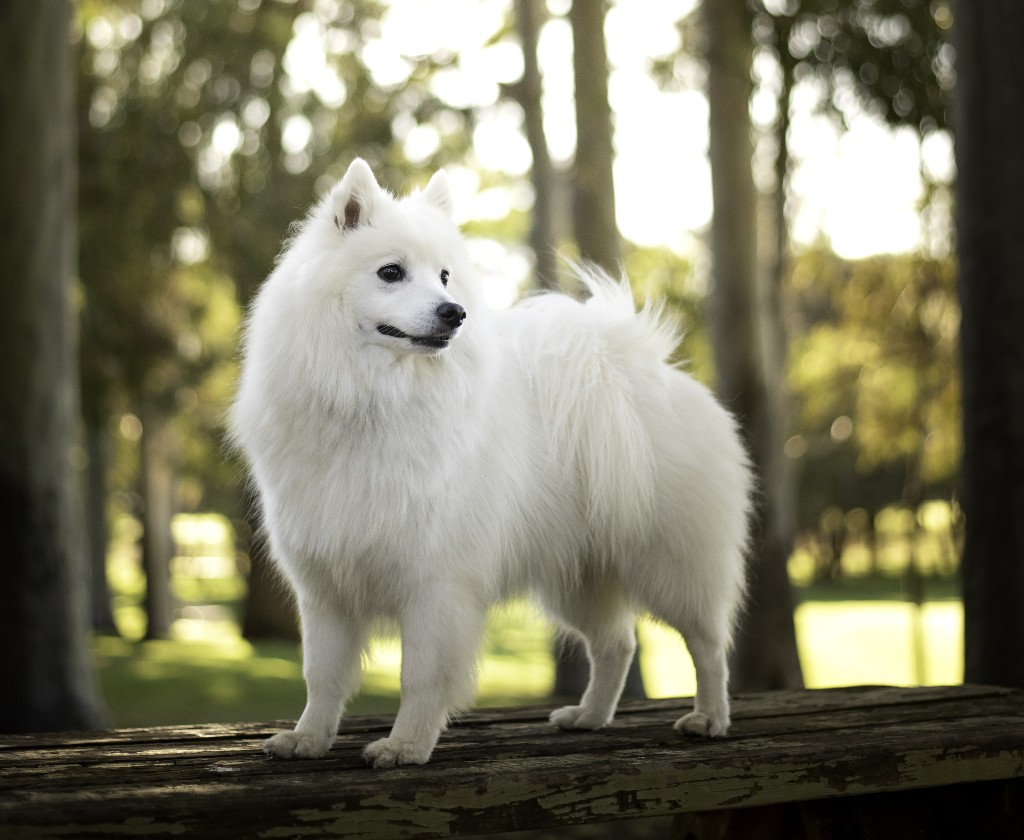
Miniature American Eskimo

Temperament: Friendly, trainable, and sporty in a small package. American Eskimo Dogs are bright white spitz-type companions who bond closely with their people and do well with children and other animals. They can be vocal, enjoy training and dog sports, and have heavy seasonal shedding.
Height: Toy: 9-12 inches (23-30 cm), Miniature: 12-15 inches (30-38 cm)
Weight: Toy: 6-10 pounds (2.7-4.5 kg), Miniature: 10-20 pounds (4.5-9 kg)
Life Span: 13-16 years
Outlier Index ?
0.42
Born before 2016: 0.44 Born after 2024:
Avg Genetic Rel. ?
-0.02
Born before 2016: -0.03 Born after 2024:
Internal Relatedness ?
0.00
Born before 2016: 0.02 Born after 2024:
Miniature American Eskimo
#NameGender OIAGRIR
1 Sasha mini Pearl F 0.91 -0.21 -0.04
2 Stardust on the Blossom Trail CGC F 0.39 -0.06 0.25
3 Amar's Dan's Darling Caprice F 0.36 -0.03 0.16
4 Amars CB F 0.45 -0.03 -0.08
5 Amar's Minxys Petuna F 0.30 0.03 -0.04
6 Miracle Misty Mornin Stranger M 0.39 -0.03 0.09
7 Klondyke's Ride of the Valkyries For Las Rosas F 0.47 -0.04 -0.13
8 Wintersun's Rockstar At Trinity M 0.29 0.01 0.17
9 Trinity Irresistable Reflections F 0.41 0.01 0.01
10 Trinity's Amazing Grace F 0.49 -0.05 -0.09
American Eskimo Dogs descend from the German Spitz, brought to the United States by German immigrants in the late 19th and early 20th centuries. On farms, their pure white coats were less practical than colored dogs that could be seen against snow, and they were often sold on to circuses and traveling shows, where their trainability and striking appearance made them popular performers. The breed was renamed "American Eskimo Dog" during the anti-German sentiment of World War I. The three size varieties (Toy, Miniature, and Standard) all share the same foundation and have been bred largely within variety. In the BetterBred platform, Toy and Miniature are managed as a single combined gene pool given their close genetic relationship.
Cancer and eye disorders (including progressive retinal atrophy and juvenile cataracts) are the most commonly reported health concerns per the American Eskimo Dog Club of America's OFA survey. Diabetes has been flagged as a rising concern in the breed. Patellar luxation and Legg-Calve-Perthes disease occur as in many small breeds.
VGL has reported Toy and Miniature American Eskimo Dogs carrying an average of around 6.09 alleles across the 33 STR loci, with an effective allele count near 3.28. Those are reasonable numbers for a smaller-size breed with an active but concentrated breeder community. Rare alleles deserve deliberate preservation, as in most breeds. VGL testing has found American Eskimo Dogs (Toy and Miniature) with observed heterozygosity essentially equal to expected, giving an inbreeding coefficient near zero. That is a good breed-wide signal. Individual IR values still vary and breeders should continue prioritizing less related pairings.

Average metrics by birth year for dogs with recorded birthdates in the BetterBred database.

A 3D genetic map of enrolled Miniature American Eskimo dogs in the BetterBred database, based on allele-sharing distance across 33 STR loci. This is not a complete picture of the breed — it reflects only dogs whose owners have enrolled them. Drag to rotate · scroll to zoom · hover for dog names (public profiles only).

Historical founders — oldest 25% of enrolled dogs     Current gene pool — most recent 50% of enrolled dogs
Building plot… this may take a minute for larger breeds.

The Dog Leukocyte Antigen (DLA) region controls immune function and is the most polymorphic portion of the canine genome. Every dog carries two sets of DLA haplotypes — one from each parent — which almost never recombine across generations. Frequency percentages reflect how often each haplotype appears across all allele copies in the breed, not the percentage of dogs carrying it.

Class I Haplotypes

HaplotypeFrequency
1014
28.7%
1054
24.5%
1002
12.8%
1153
9.6%
1093
6.4%
1215
6.4%
1016
4.3%
1012
3.2%
1030
2.1%
1011
1.1%
1268
1.1%

Class II Haplotypes

HaplotypeFrequency
2037
25.5%
2022
24.5%
2001
12.8%
2053
10.6%
2032
6.4%
2080
6.4%
2014
3.2%
2003
3.2%
2050
3.2%
2023
2.1%
2084
1.1%
2096
1.1%

Class I & II Combinations

Class IClass IIFrequency
1014 2037
25.5%
1054 2022
24.5%
1002 2001
13.3%
1153 2053
9.2%
1215 2080
7.1%
1093 2032
6.1%
1012 2003
3.1%
1014 2050
3.1%
1016 2014
3.1%
1030 2023
2.0%
1011 2096
1.0%
1016 2084
1.0%
1268 2053
1.0%

The Canine Diversity Test from UC Davis Veterinary Genetics Laboratory is the foundation of BetterBred’s breed management tools. Testing your dog adds to the breed database and gives you access to the full suite of breeding analysis tools.

Order from UC Davis VGL →