Breed Page

Standard American Eskimo — BetterBred Breed Page – BetterBred.com
BetterBred Breed Profile

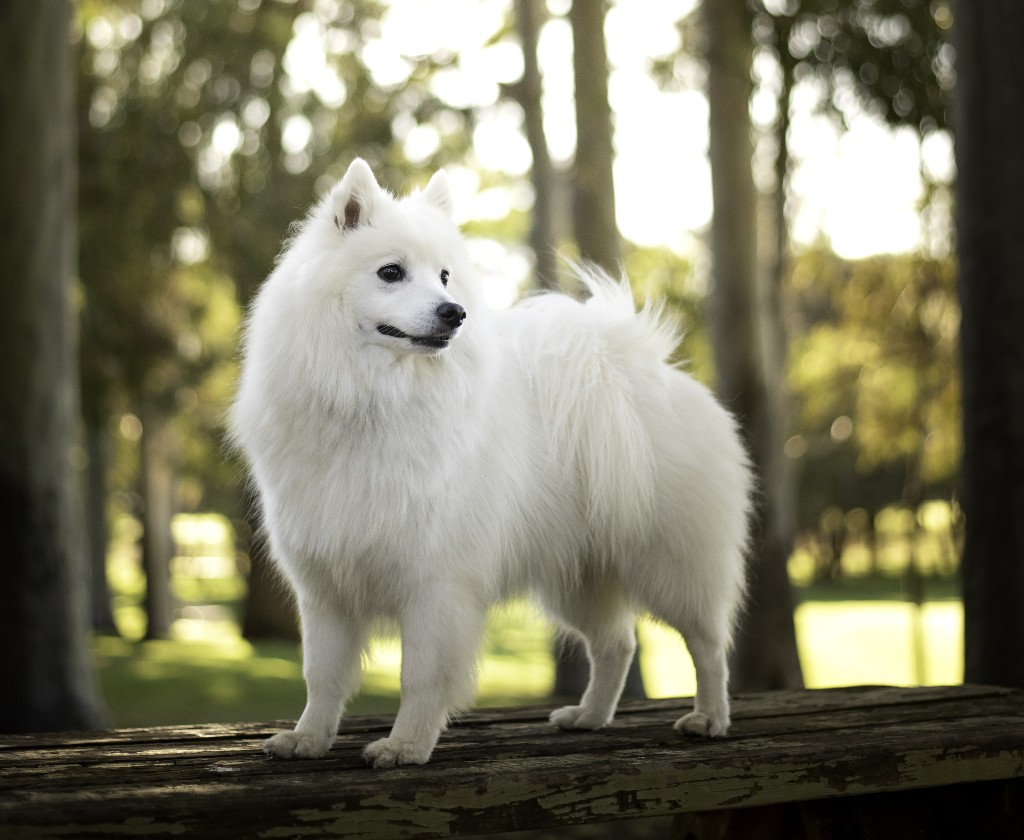
Standard American Eskimo

Temperament: Friendly, trainable, and sporty. Standard American Eskimo Dogs are bright white spitz-type working companions - intelligent, alert, and strongly bonded to family. They can be vocal and make capable watchdogs. Regular exercise and mental engagement keep them at their best. Heavy seasonal shedding.
Height: 15-19 inches (38-48 cm)
Weight: 25-35 pounds (11-16 kg)
Life Span: 13-15 years
Outlier Index ?
0.33
Born before 2016: 0.37 Born after 2024:
Avg Genetic Rel. ?
-0.04
Born before 2016: -0.05 Born after 2024:
Internal Relatedness ?
0.05
Born before 2016: 0.00 Born after 2024:
Standard American Eskimo
#NameGender OIAGRIR
1 Skyflyer Piper Cub Power F 0.25 0.00 0.04
2 CrystalTyme Eryn Go Braugh F 0.22 0.02 0.14
3 CH Thunderpas Ayla@Crystaltyme F 0.23 0.03 0.04
4 Thunderpas Thunderbolt M 0.33 -0.04 0.08
5 Pikatti's Holiday Spirit F 0.78 -0.29 -0.14
6 Classic's Aziza F 0.59 -0.11 -0.27
7 Silveroak's Padawan Rebel Ahsoka F 0.18 0.08 -0.04
8 Silveroaks Every Move You Make M 0.40 -0.10 0.05
9 Miracle P-Irish Americn Scandl F 0.30 0.04 -0.19
10 Wrights Sabrina F 0.34 -0.05 0.01
The Standard American Eskimo Dog is the largest of the three American Eskimo size varieties and descends directly from the German Spitz, brought to the United States by German immigrants in the late 19th and early 20th centuries. The breed was renamed "American Eskimo Dog" during the anti-German sentiment of World War I. Standards were often kept as all-around farm dogs, watchdogs, and companions, and their trainability and striking white appearance made them popular in traveling circuses and shows. The Standard variety shares its foundation with the smaller Toy and Miniature varieties but has been bred largely within its size, and now shows modest genetic divergence from them.
Cancer and eye disorders (including progressive retinal atrophy and juvenile cataracts) are the most commonly reported health concerns per the American Eskimo Dog Club of America's OFA survey. Diabetes has been flagged as a rising concern in the breed. Hip dysplasia occurs at lower rates than in many breeds of this size.
VGL has reported Standard American Eskimo Dogs carrying an average of around 5.45 alleles across the 33 STR loci, with an effective allele count near 2.55. Both numbers are on the lower end, reflecting the within-variety breeding and the modest overall population of Standards. Rare alleles are especially valuable in a pool this constrained. VGL testing has found Standard American Eskimo Dogs with observed heterozygosity slightly below expected, giving a modestly positive inbreeding coefficient. That is a real signal and reflects the fact that Standards have been bred within variety for decades, leaving a narrower effective pool than the species-wide breed numbers would suggest. Breeders have room to prioritize less related pairings and consider cross-variety pairings where appropriate.

Average metrics by birth year for dogs with recorded birthdates in the BetterBred database.

A 3D genetic map of enrolled Standard American Eskimo dogs in the BetterBred database, based on allele-sharing distance across 33 STR loci. This is not a complete picture of the breed — it reflects only dogs whose owners have enrolled them. Drag to rotate · scroll to zoom · hover for dog names (public profiles only).

Historical founders — oldest 25% of enrolled dogs     Current gene pool — most recent 50% of enrolled dogs
Building plot… this may take a minute for larger breeds.

The Dog Leukocyte Antigen (DLA) region controls immune function and is the most polymorphic portion of the canine genome. Every dog carries two sets of DLA haplotypes — one from each parent — which almost never recombine across generations. Frequency percentages reflect how often each haplotype appears across all allele copies in the breed, not the percentage of dogs carrying it.

Class I Haplotypes

HaplotypeFrequency
1002
66.7%
1153
22.5%
1012
2.5%
1014
2.5%
1261
1.7%
1054
0.8%
1087
0.8%
1093
0.8%
1030
0.8%
1016
0.8%

Class II Haplotypes

HaplotypeFrequency
2001
66.7%
2053
22.5%
2003
2.5%
2022
2.5%
2037
2.5%
2014
0.8%
2023
0.8%
2033
0.8%
2066
0.8%

Class I & II Combinations

Class IClass IIFrequency
1002 2001
66.7%
1153 2053
22.5%
1012 2003
2.5%
1014 2037
2.5%
1261 2022
1.7%
1016 2014
0.8%
1030 2023
0.8%
1054 2022
0.8%
1087 2066
0.8%
1093 2033
0.8%

The Canine Diversity Test from UC Davis Veterinary Genetics Laboratory is the foundation of BetterBred’s breed management tools. Testing your dog adds to the breed database and gives you access to the full suite of breeding analysis tools.

Order from UC Davis VGL →